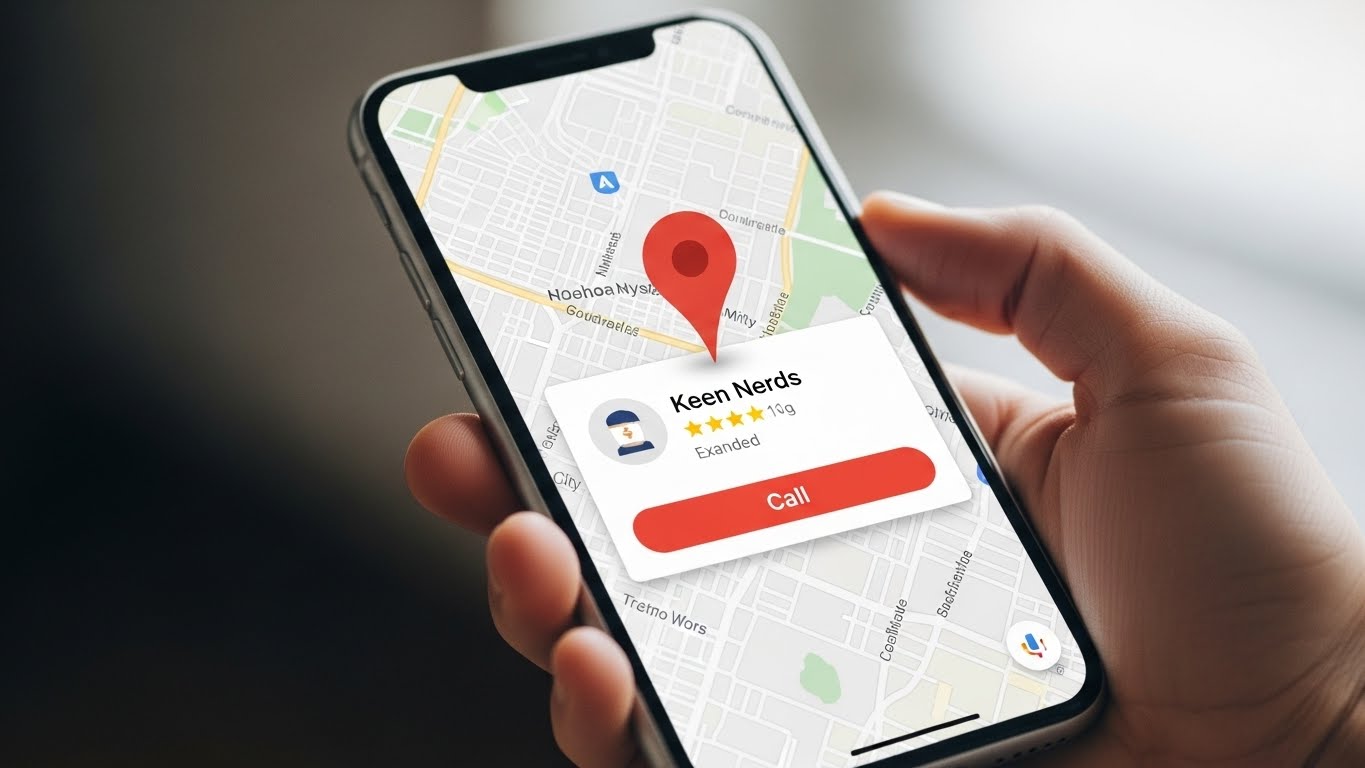
Running a local business means your phone needs to ring. Not just ring occasionally, but consistently bring in qualified leads who are ready to hire your services. That’s where local SEO comes into play—and when done right, it transforms your online presence into a lead-generating machine.
I’ve worked with dozens of service-based businesses over the years, from plumbers scrambling to keep up with demand to law firms looking to boost their consultation bookings. The businesses that thrive aren’t necessarily the ones with the biggest marketing budgets. They’re the ones that understand how local search works and optimize every touchpoint to encourage that phone call.
Let me walk you through the strategies that actually move the needle.
Why Local SEO Matters for Phone Call Generation

Think about the last time you needed an emergency plumber or wanted to find a dentist nearby. You probably grabbed your phone, typed something like “plumber near me” into Google, and called one of the first businesses that popped up. That’s local SEO in action.
The beautiful thing about local search is intent. When someone searches for “electrician in [city name]” or “emergency HVAC repair,” they’re not browsing. They’re ready to pick up the phone and hire someone right now. These searches convert at a much higher rate than general informational queries.
Google understands this behavior, which is why local pack results—those map listings that appear at the top of search results—have become prime real estate. Getting your business listed there means visibility right when potential customers are making their decision.
Optimizing Your Google Business Profile for Maximum Calls

Your Google Business Profile is the foundation of your local SEO strategy. It’s often the first impression potential customers get of your business, and it directly influences whether they call you or your competitor.
Start by claiming and verifying your profile if you haven’t already. Then go beyond the basics. Upload high-quality photos of your work, your team, and your location. Businesses with photos receive 42% more requests for directions and 35% more click-throughs to their websites than those without.
Your business description should clearly communicate what you do and who you serve, but don’t keyword-stuff it. Write naturally about your services, specialties, and what makes you different. Include your service areas to help Google understand where you operate.
The categories you select matter tremendously. Choose your primary category carefully—it should be the most accurate description of your core business. You can add secondary categories too, but focus on relevance over quantity.
Here’s something many businesses overlook: your business hours. Keep them accurate and update them for holidays. Nothing frustrates potential customers more than calling during listed business hours only to reach voicemail because you’re actually closed.
Enable the messaging feature if it makes sense for your business model. Some customers prefer texting initial questions before committing to a phone call. Respond quickly—Google tracks your response time and rates, which influences your visibility.
Making Your Phone Number Impossible to Miss

This seems obvious, but you’d be surprised how many businesses make it difficult to find their phone number. On mobile devices especially, your click-to-call button should be prominent and accessible within seconds of landing on your site.
Use a local phone number rather than a toll-free number for local SEO purposes. Google’s algorithm pays attention to NAP consistency—that’s Name, Address, and Phone number—across the web. Using the same local number everywhere reinforces your geographic relevance.
Consider implementing call tracking numbers for different marketing channels. This helps you understand which SEO efforts are actually driving phone calls versus just website traffic. Just make sure you’re not swapping numbers too frequently, as this can hurt your NAP consistency.
Your phone number should appear in multiple strategic locations:
- Header and footer of every page
- Contact page with clear formatting
- Google Business Profile
- Local directory listings
- Schema markup in your website code
Make it clickable on mobile. Seriously, this is 2025—if someone has to copy and paste or manually dial your number, you’re losing calls.
Local Citations and NAP Consistency

Local citations are mentions of your business across the web—directories, review sites, social media platforms, and industry-specific listings. They act as trust signals to Google, confirming that your business is legitimate and established.
But here’s the critical part: consistency matters more than quantity. Having your business listed on 50 directories with slightly different information actually hurts more than having accurate listings on 20 high-quality sites.
Your NAP (Name, Address, Phone number) should be identical everywhere. Not mostly the same—identical. “123 Main Street” on one site and “123 Main St.” on another might seem trivial, but it creates confusion for search algorithms.
Start with the major platforms:
- Google Business Profile
- Bing Places
- Apple Maps
- Facebook Business Page
- Yelp (depending on your industry)
- Industry-specific directories
Then move to local chambers of commerce, Better Business Bureau, and niche directories relevant to your trade. For contractors, sites like HomeAdvisor and Angi matter. For dentists, Healthgrades and Zocdoc carry weight.
Don’t pay for bulk citation services that spam your information across hundreds of low-quality directories. Focus on quality and accuracy. Set aside time quarterly to audit your citations and correct any discrepancies.
Reviews: The Phone Call Catalyst

Online reviews don’t just influence your reputation—they directly impact your local search rankings and whether people feel comfortable calling you. Businesses with more positive reviews rank higher in local pack results. It’s that simple.
But getting reviews isn’t about begging customers or incentivizing them (which violates most platform policies anyway). It’s about creating a system that makes leaving reviews easy and natural.
The best time to ask for a review is right after you’ve delivered great service and the customer is happy. Send a simple follow-up email or text message with a direct link to your Google Business Profile review page. Make it as frictionless as possible.
Respond to every review—positive and negative. When you respond thoughtfully to negative reviews, it shows potential customers that you care about service quality and are willing to make things right. Studies show that 89% of consumers read business responses to reviews.
Don’t panic about the occasional negative review. What matters is your overall rating and how you handle criticism. A 4.7 rating with 50 reviews is more trustworthy than a perfect 5.0 with only three reviews.
Here’s a pro tip: mention specific services in your review responses naturally. When someone leaves a review about your plumbing repair, respond with “Thank you for trusting us with your emergency plumbing needs in [city].” This reinforces your service keywords without being spammy.
Local Keyword Targeting That Converts

Generic keywords drive traffic. Local keywords drive phone calls. There’s a huge difference.
Someone searching for “SEO tips” is researching. Someone searching for “SEO company near me” or “SEO services in Lahore” is shopping. Your content strategy should prioritize these high-intent, location-specific searches.
Start by building a list of your core services and the cities or neighborhoods you serve. Then create combinations:
- [Service] in [City]
- [Service] near me
- [City] [Service]
- Best [Service] in [City]
- Emergency [Service] [City]
Don’t just stuff these keywords into your homepage and call it done. Create dedicated service area pages for each location you serve. If you’re a contractor serving five neighboring cities, you should have five distinct pages with unique, valuable content about serving each area.
Your title tags and meta descriptions should include location terms. For a page targeting “electrician in San Diego,” your title might be “Licensed Electrician in San Diego | 24/7 Emergency Service” and your meta description should reinforce your local presence and encourage the call.
Include local landmarks, neighborhoods, and geographic features in your content naturally. Writing about “serving homeowners near Balboa Park” or “commercial electrical work in the Gaslamp Quarter” helps Google understand your service area relevance.
Mobile Optimization for Local Searchers

More than 60% of local searches happen on mobile devices, and most of those are conducted with immediate intent. Someone searching for “emergency dentist” on their phone at 10 PM has a toothache right now and needs help immediately.
Your website must load fast on mobile—ideally under three seconds. Every second of delay decreases conversion rates significantly. Use Google’s PageSpeed Insights tool to identify and fix performance issues.
The click-to-call button should be prominent and easy to tap. Don’t make users zoom in or fumble around. Use phone number schema markup in your code so Google can display your number directly in search results with a clickable call button.
Simplify your mobile navigation. Local searchers aren’t there to browse your entire site architecture. They want to know what you do, whether you serve their area, and how to contact you. Make that information accessible within two taps.
Your forms should be short. If you must use a contact form in addition to phone calls, ask only for essential information on mobile. Name, phone, and brief message. That’s it. You can gather additional details during the call.
Creating Content That Establishes Local Authority

Content marketing for local SEO isn’t about churning out blog posts stuffed with keywords. It’s about establishing yourself as the go-to expert in your service area.
Write about local issues and events. If you’re an HVAC company, create content about preparing homes for your region’s specific weather challenges. If you’re a law firm, write about local laws and regulations that affect your potential clients.
Answer the questions your customers actually ask. What are the common problems people in your area face related to your services? Create comprehensive guides that solve these problems. When someone finds your detailed guide to fixing low water pressure problems specific to older homes in their neighborhood, you’ve earned trust before they even call.
Create case studies featuring local projects. “How We Helped a Midtown Restaurant Resolve Their Recurring Plumbing Issues” is much more compelling to local readers than generic service descriptions.
Include your service areas naturally throughout your content. Don’t force it, but when it’s relevant to mention that you serve a specific neighborhood or city, do so. This reinforces your geographic relevance to search engines.
Technical SEO Foundations for Local Visibility

The flashy strategies get all the attention, but technical SEO basics can make or break your local visibility.
Implement local business schema markup on your website. This structured data helps search engines understand your business details—your name, address, phone number, service areas, hours of operation, and more. It’s not visible to human visitors, but it speaks directly to search engine crawlers.
Create and submit a comprehensive XML sitemap that includes all your important pages, especially those location-specific service pages. This helps search engines discover and index your content efficiently.
Your website should use HTTPS encryption. It’s a ranking factor, and it builds trust with visitors. Most hosting providers offer free SSL certificates through Let’s Encrypt.
Fix broken links and redirect old URLs properly. If you’ve changed service pages or restructured your site, implement 301 redirects so you don’t lose the SEO value of old pages and don’t frustrate users with 404 errors.
Ensure your contact page is robust. Include your full address with embedded Google Maps, multiple phone numbers if applicable, email address, and business hours. This page should be linked from your main navigation.
Leveraging Local Link Building

Backlinks still matter for local SEO, but the strategy looks different than traditional link building. You’re not trying to get links from national publications—you’re building relationships with local organizations, businesses, and media outlets.
Get involved in your community. Sponsor local events, teams, or charities. Many of these sponsorships come with a link from the organization’s website. More importantly, they build genuine community presence.
Build relationships with complementary local businesses. If you’re a contractor, partner with local real estate agents, property managers, or architects. Guest post on their blogs or collaborate on local guides. These partnerships often result in natural link exchanges.
Reach out to local news sites and blogs about your expertise. Offer to be a source for stories related to your industry. When a local publication quotes you about home renovation trends or legal issues, that link carries significant local relevance.
Join your local chamber of commerce and industry associations. The directory listings often include links to member websites, and being part of these organizations enhances your local credibility.
Create genuinely useful resources that other local sites want to link to. A comprehensive guide to local building codes, a calculator tool, or an interactive map of service areas can attract natural backlinks from other local websites.
Tracking What Matters: Calls, Not Just Rankings

You can rank #1 for every local keyword and still fail if your phone isn’t ringing. Tracking the right metrics tells you whether your local SEO strategy is actually working.
Set up call tracking to understand which marketing channels drive phone calls. Use different tracking numbers for your website, Google Business Profile, and directory listings. This attribution helps you double down on what works.
Monitor your Google Business Profile insights. You can see exactly how many people viewed your profile, clicked for directions, visited your website, and called your business. This data is gold for understanding local search performance.
Track not just call volume but call quality. Are these calls from people in your service area? Are they asking about services you actually offer? Implement a simple system to categorize incoming calls by source and intent.
Use Google Analytics to monitor which pages lead to calls. If certain service pages consistently drive phone calls while others don’t, that tells you where to focus your content optimization efforts.
Set up Google Search Console to track your performance for local keywords. Which search terms are driving impressions and clicks? Are you ranking in the local pack for your target keywords?
The Call-Focused Local SEO Mindset

At the end of the day, local SEO strategies that drive phone calls come down to understanding your customer’s journey. They have a problem, they search for a solution, and they need to quickly determine whether you can help them.
Every optimization decision should pass this test: Does this make it easier for qualified local customers to find me and call me? If the answer is yes, do it. If it’s a tactic that might help your rankings but creates friction in the customer journey, reconsider.
Build trust at every touchpoint. Your Google Business Profile should look professional and complete. Your website should load fast and make calling easy. Your reviews should demonstrate quality service. Your content should establish expertise.
Stay consistent with your efforts. Local SEO isn’t a one-time project—it’s an ongoing process of optimization, monitoring, and improvement. The businesses that dominate their local markets are the ones that treat local SEO as a core business function, not an afterthought.
And remember, the goal isn’t just to rank well. It’s to ring well. Focus on the fundamentals, serve your customers exceptionally so they leave great reviews, and make it dead simple for people to pick up the phone and call you. Do that consistently, and your phone will ring.